LED Light Therapy 101: Firming Sagging Skin Explained
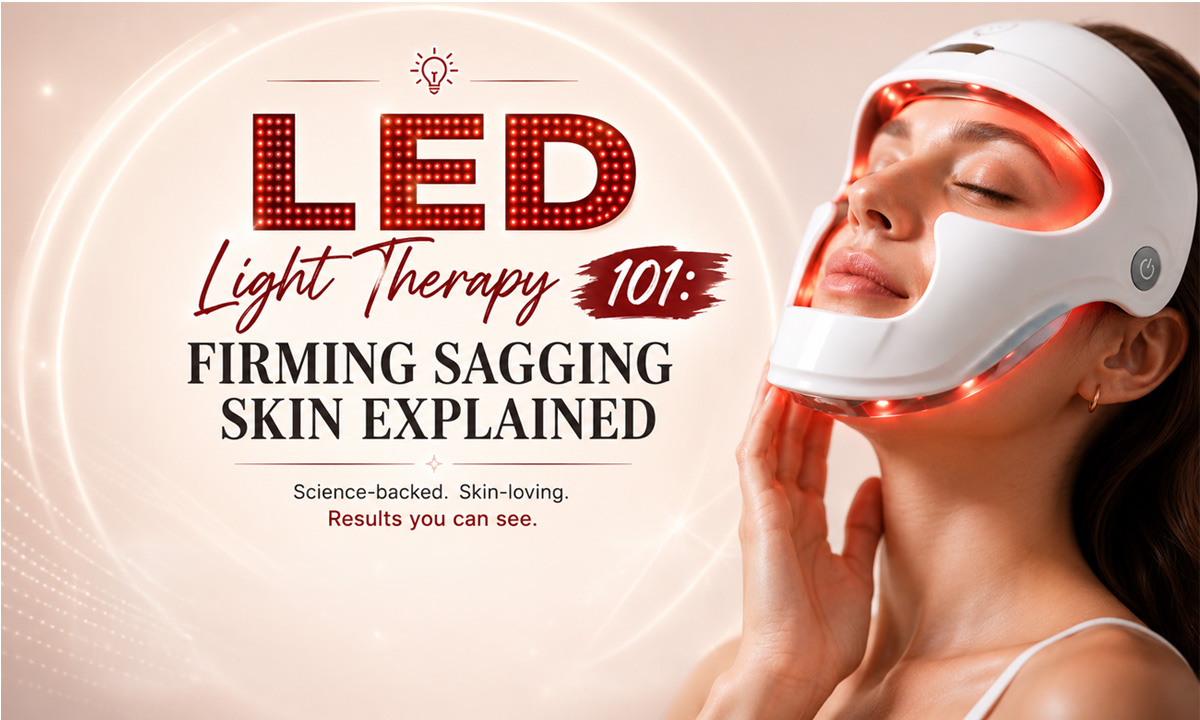
Scroll through any skincare corner of the internet and you'll see the same glowing masks showing up again and again, usually with a caption promising firmer, less saggy-looking skin in weeks. If you've already read up on the basics of LED and blue light, you've probably wondered whether the sagging-specific claims hold up the same way the acne claims do.
Sagging skin is a different problem than breakouts or dullness, and it deserves a more specific answer than "light therapy fixes everything." So let's actually get into the biology of sagging: what causes it in the first place, and whether LED light has a real mechanism for addressing sagging, or whether it's riding on the coattails of its acne-fighting reputation.
What's Happening When Skin Starts Sagging
|
Sagging isn't a surface issue. It's structural. Underneath the epidermis, your dermis is held up by a scaffold of collagen and elastin, produced by cells called fibroblasts. Collagen gives skin its firmness; elastin gives it the ability to snap back into place instead of sagging. When that scaffold weakens, skin sags—it folds instead of bouncing, and lift starts to give way to visible sagging along the jaw, cheeks, and neck. A few things drive that sagging process along:
|
 |
None of this is really about "aging" in the vague sense people usually mean—it's a measurable decline in fibroblast output, and that distinction matters because it tells you what actually needs to change to reverse sagging. If the underlying cause of sagging is that fibroblasts have slowed down, then the fix has to involve getting them working again, not just plumping the surface temporarily with moisture and calling the sagging solved.
The Core Science: How LED Light Talks to Your Cells
 |
This is where photobiomodulation comes in—the actual mechanism behind LED therapy and the reason it's discussed differently from a moisturizer or a serum. Here's the short version: light at specific wavelengths gets absorbed by mitochondria, specifically an enzyme called cytochrome c oxidase. That absorption boosts the cell's energy output (ATP), and fibroblasts that are running hotter energetically tend to produce more of the collagen and elastin that sagging skin has been losing. Wavelength is the whole game here, and it's the detail most marketing skips over. Red light, generally in the 630–660nm range, penetrates deep enough to reach the dermis, where fibroblasts and the collagen scaffold actually live. Near-infrared light goes deeper still, which is why some devices combine both. |
Blue light, by contrast, stays closer to the surface and works mainly by targeting acne-causing bacteria — useful for breakouts, but not the wavelength you want if sagging is the concern you're addressing, since it never reaches deep enough to influence the fibroblasts responsible for sagging in the first place.
That distinction is also why LED and microcurrent devices get lumped together so often, even though they work in completely different ways. Microcurrent uses low-level electrical current to stimulate muscle contraction underneath the skin — more of a "workout" for facial muscles. LED doesn't touch muscle at all; it works at the cellular level inside skin tissue. Sagging responds to both mechanisms for different reasons, which is exactly why some people pair the two rather than picking one.
"Sagging skin is a different problem than breakouts or dullness, and it deserves a more specific answer than 'light therapy fixes everything.'"
What the Research Actually Supports
|
It's worth being upfront: photobiomodulation research is genuinely promising, but it's not a substitute for a surgical lift, and nobody serious is claiming otherwise. Multiple clinical studies on red and near-infrared light have shown measurable increases in collagen density and improved skin elasticity after consistent use—typically over 8 to 12 weeks, not overnight. The realistic takeaway is that LED works gradually and cumulatively against sagging, and consistency matters more than any single session's intensity. A single treatment isn't going to visibly change sagging skin. What the evidence supports is a slow rebuilding process: fibroblasts get stimulated repeatedly, collagen output increases incrementally, and over weeks to months, sagging skin regains some firmness and bounce-back in ways that are measurable, if not dramatic. |
 |
This is also why LED tends to be described as a maintenance and prevention tool against sagging as much as a treatment for sagging that's already visible—it's about keeping fibroblasts active before sagging becomes more advanced, not reversing years of collagen loss in a month.
 |
How the Devices Apply the Science
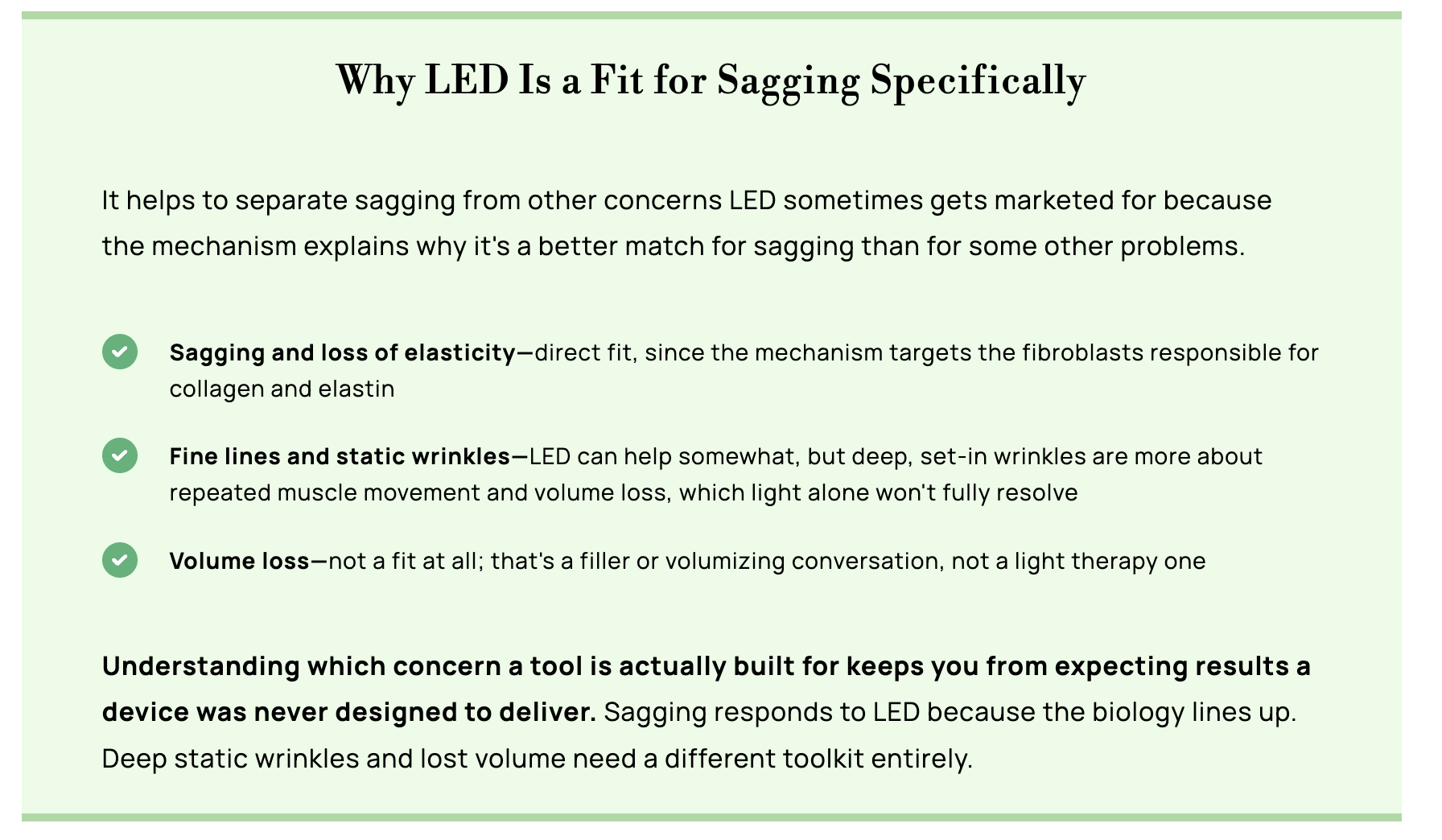
A few options on the market translate this research into at-home routines, each with a slightly different approach to delivering red and near-infrared light to the fibroblasts responsible for sagging skin. The right device usually comes down to how much hands-free coverage you want versus how targeted you need the treatment to be.
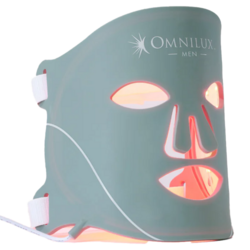
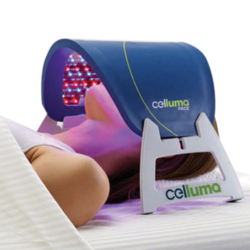
Sagging responds best to consistent, correctly targeted light exposure. Hence, the "best" device here really depends on whether hands-free convenience, precise targeting, or skin-type-specific calibration matters more to your routine.
Getting Real Results: What Consistency Actually Looks Like
|
None of the science above matters much if the device sits in a drawer after week two. A few practical notes make the difference between a device that helps and one that doesn't:
|
 |
Treating LED as a long-term habit rather than a quick fix is the single biggest factor separating people who see real improvement from people who give up after two sessions.
"Treating LED as a long-term habit rather than a quick fix is the single biggest factor separating people who see real improvement from people who give up after two sessions."
Bringing It Together
Sagging skin comes down to fibroblasts slowing their collagen and elastin output, and LED light therapy is one of the few at-home tools with a real, research-backed mechanism for waking those cells back up. It's not instant, and it's not a replacement for sun protection or a full skincare routine, but used consistently, it's a legitimate answer to a structural problem, not just another glow-inducing gadget riding the light therapy trend.
If firmness and elasticity are the concerns you're trying to address, browse our Skin Firmness & Elasticity collection or explore our full range of Spa & Anti-Aging Devices to find the option that fits your routine. Not sure where to start? Our licensed aestheticians offer a free skin consultation to help you match the right device to your skin's needs.